The Myth of the 'Formal' Micro-Enterprise

We often hear arguments that digital payments are crucial because they create a 'data trail,' while cash is 'invisible,' thus hindering access to credit. This is a powerful and valid point, but my fieldwork suggests that for millions of household enterprises in India's informal economy, the reliance on cash is far more strategic and complex than simply a 'cash habit.' To understand this, let's look at Amit.
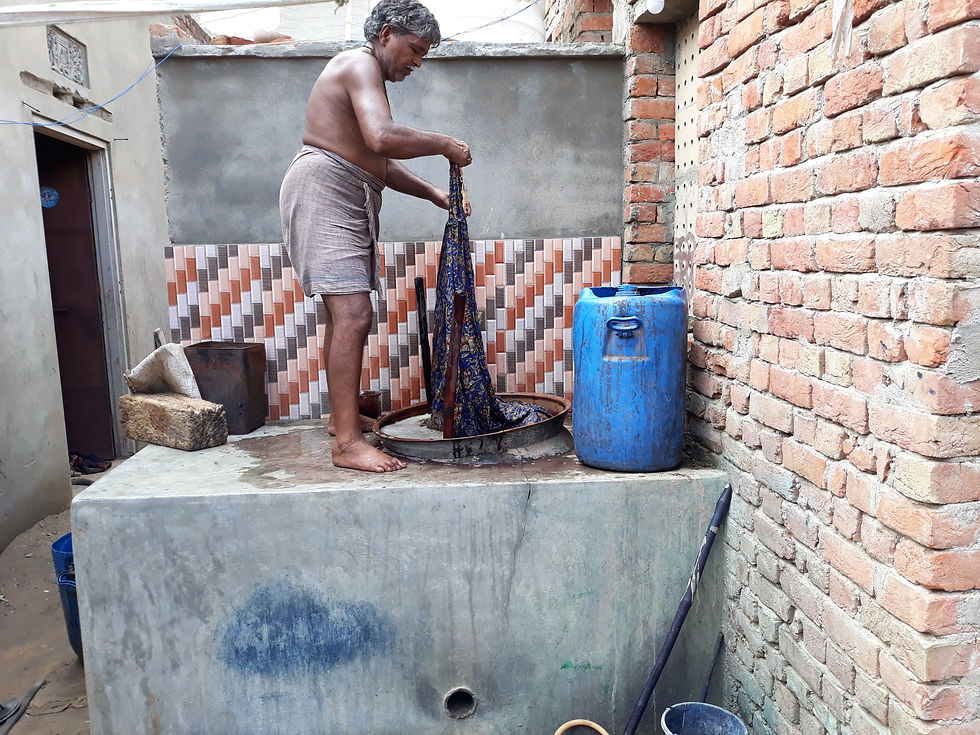
Amit is a 21-year-old artisan from Bagru, Rajasthan. He's a digital native who handles sales and accounts for his family's traditional Bagru and Indigo Dabu printing business. On the surface, his business looks formal: they have a GST registration, a business bank account, and he uses NEFT transfers to pay his workers.
But Amit’s household enterprise, like millions of other micro, small, and nano-enterprises, lives a dual life. They are a 'semi-formal' enterprise, meticulously navigating two different economic worlds. And nowhere is this more apparent than in their necessary reliance on cash.
Why Artisans Rely on Cash: It's a Strategy, Not a Habit
The reality is that cash isn’t just an outdated habit; it’s a vital tool for survival. For entrepreneurs like Amit, cash provides a flexibility that formal systems often can’t match.
Navigating Market Demands
A significant portion of Amit’s customers ask for invoices without GST. To secure these sales, he must accept cash payments. This isn't a choice driven by a lack of digital literacy; it’s a necessary compromise to meet specific market demands and maintain crucial customer relationships.
Managing Labor and Liquidity
The cash received from these sales is used to pay his daily wage workers. In a community where a significant portion of the workforce prefers cash for immediate liquidity, it is the most practical and efficient way to manage labor relations. Cash transactions allow him to keep the production running without waiting for bank transfers to clear.
Cash is Not Invisible, It’s Flexible
The CGAP post is correct in that digital payments create a data trail for financial institutions to assess creditworthiness. But my interviews with artisans suggest that what the formal system sees as "invisible," the artisan views as flexible. Cash is the grease that allows a semi-formal business to operate in a largely informal economy. It enables them to:
Maneuver the tax system by meeting specific customer requests.
Keep the production engine running by providing immediate liquidity for daily wages and raw materials.
Bridge the formal and informal worlds, giving them a foothold in both.
The issue isn't simply a lack of digital infrastructure. It's a matter of misaligned incentives. We need to look beyond the idea of "breaking the cash habit" and instead focus on creating financial systems that truly integrate with, rather than ignore, the realities of the informal economy. Only then can we unlock the true potential of our incredible micro-enterprises.


Comments